
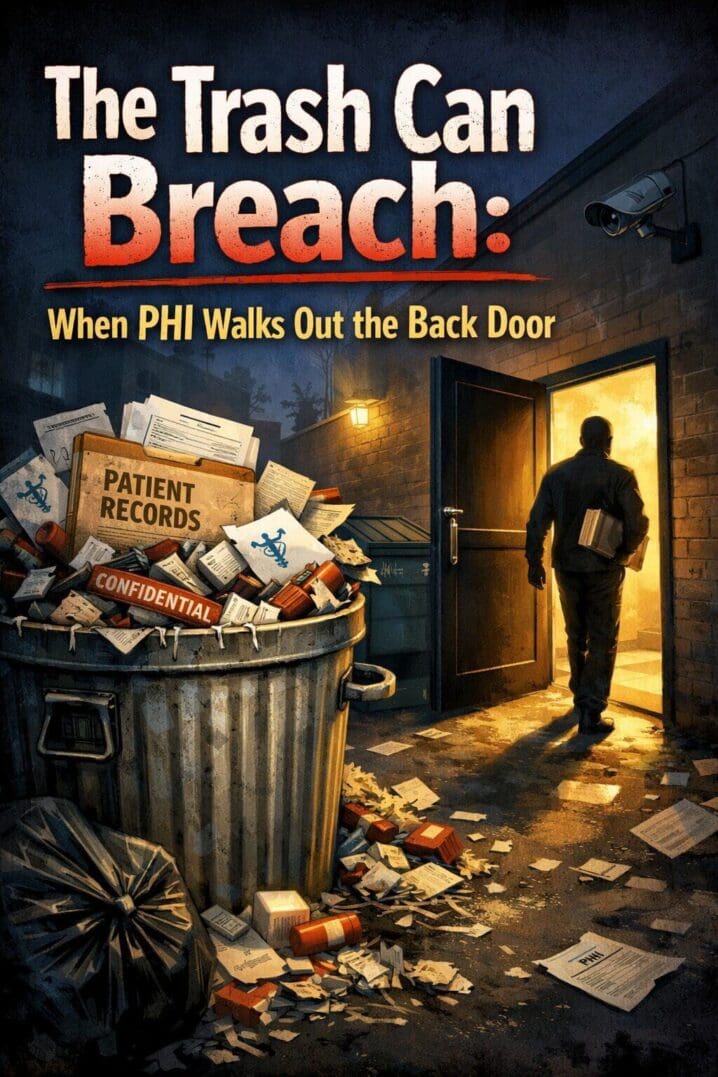
The Trash Can Breach: When PHI Walks Out the Back Door
When most healthcare leaders think about privacy breaches, they picture cyberattacks, password failures, or bad actors accessing electronic health records. But in many rural and small healthcare settings, the biggest risk isn’t online—it’s sitting in the trash.
That’s exactly what happened at a rural clinic where outdated patient records were thrown into a standard, unsecured dumpster behind the building. A passerby noticed patient names, dates of birth, diagnoses, and treatment information exposed on several documents. The clinic had not shredded, bagged, or disposed of the files in a HIPAA-compliant manner.
This wasn’t a cyber breach. It wasn’t that sophisticated. It was a trash can breach—100% preventable and a clear violation of HIPAA’s disposal requirements.
Why Disposal Matters Under HIPAA
The HIPAA Privacy Rule requires that any protected health information, be it on paper, electronic, or otherwise, be destroyed or rendered unreadable before disposal. That means:
- Paper PHI must be shredded, pulverized, or incinerated.
- Electronic PHI must be wiped or destroyed in a manner that prevents its reconstruction.
- No PHI should ever be tossed into a regular trash can or dumpster.
The standard is simple: if someone can read it, recover it, or piece it back together, it’s not properly destroyed.
Healthcare organizations often invest in secure EHR systems, encryption, and cybersecurity tools, but overlook the very end of a record’s life cycle. And that’s often where many compliance failures occur.
How This Clinic Recovered and Strengthened Its Compliance
Once the breach was discovered, the clinic took immediate corrective action following these steps, turning a compliance failure lesson into a long-term solution.
- Contracted With a Certified Shredding Vendor
They established a relationship with a third-party shredding company that provides
locked bins, scheduled pickups, and certificates of destruction. - Implemented a Disposal Log
All PHI designated for destruction was logged before disposal, serving as evidence of due diligence and a chain-of-custody record. - Trained Every Employee on Proper Disposal
Staff were retrained on both HIPAA’s minimum necessary and disposal rules, including how to use locked bins and the consequences of improper disposal. - Updated Written Policies and Chain-of-Custody Protocols
The clinic revised policies, retention procedures, vendor agreements, and oversight expectations. - Breach Lessons: Small Clinics Are Not Exempt
Rural and small practices sometimes rely on informal processes due to resource limitations, but HIPAA does not exempt them from its requirements based on size. Every covered entity must safeguard PHI from creation through destruction.
Compliance Takeaway
The way in which a record’s life is ended is as important as how you protect it during its life. Secure destruction isn’t optional—it’s a core element of a strong compliance culture.