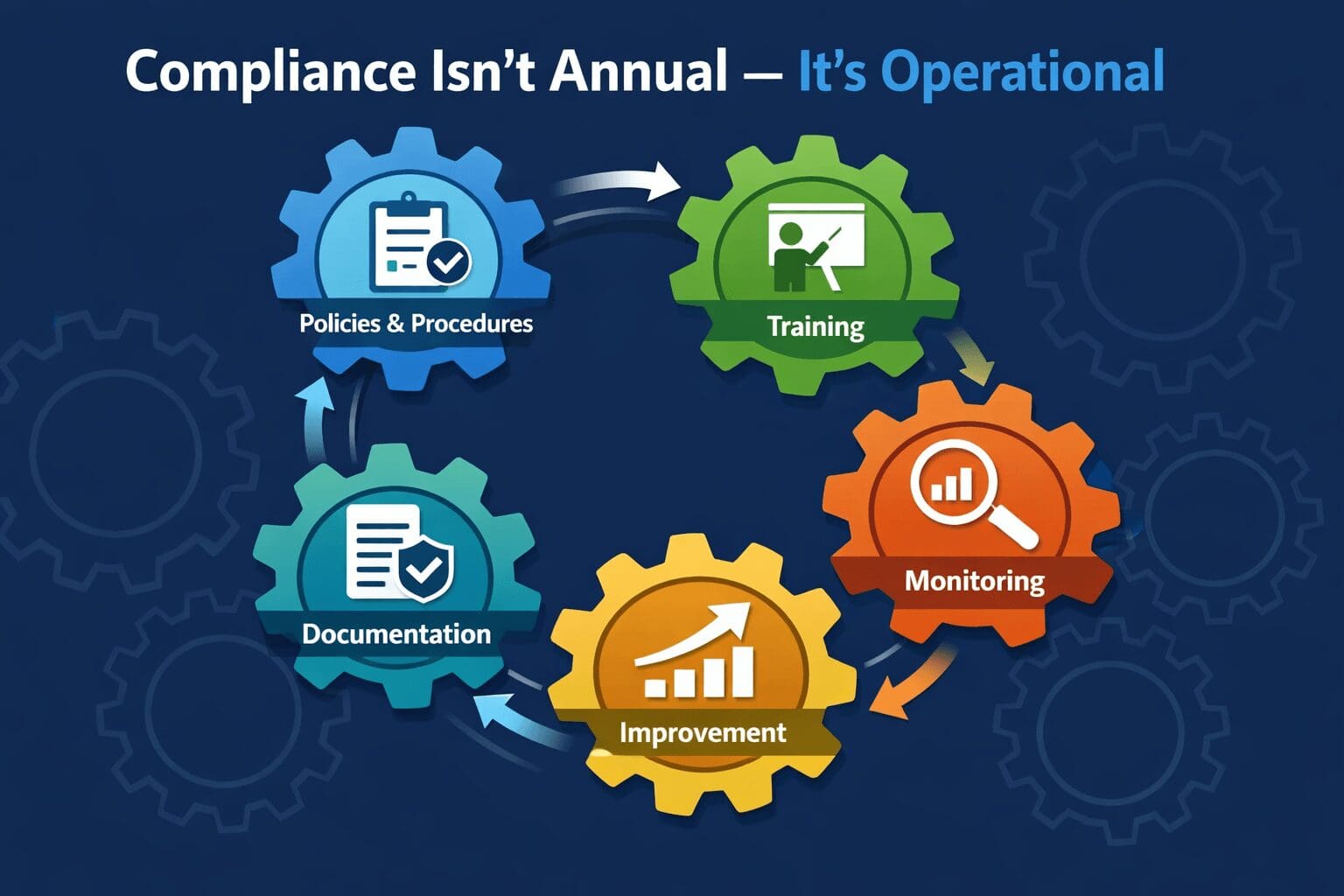
Compliance Isn’t Annual – It’s Operational
Compliance failures rarely happen because an organization lacks policies or training. They happen because compliance is treated as an event instead of a daily operational practice.
Annual training. Annual policy review. Annual attestations.
Meanwhile, compliance risk shows up every day—in how leaders answer questions, enforce expectations, and model behavior when no one is watching.
Compliance does not live in binders, policies, or learning management systems. It lives in daily decisions.
When Compliance Becomes a Calendar Item
Many organizations have compliance programs that are technically sound but operationally weak. Policies are approved. Training is completed. Documentation is filed.
What’s missing is consistent reinforcement of leadership.
When leaders: – Make exceptions “just this once” – Delay documentation because operations feel urgent – Handle issues informally to avoid discomfort
They unintentionally signal that compliance is optional when inconvenient.
In practice, most compliance failures are not caused by ignorance. The rules existed—but behavior didn’t align with them.
Compliance Is a Leadership Control Function
Compliance is often assigned to HR or a compliance officer, but leaders are the true control point.
Employees pay close attention to: – How supervisors respond to timekeeping or billing questions – Whether privacy rules apply to well‑intended shortcuts – If accountability is consistent or situational
Culture does not form from written policies. It forms from what leaders tolerate.
Organizations with strong compliance cultures have leaders who: – Reinforce expectations in real time – Pause operations to correct risk – Treat documentation as protection, not punishment
Culture Turns Rules into Reality
Every organization answers one unspoken question for its employees:
“What really matters here?”
If speed matters more than accuracy, shortcuts appear. If harmony matters more than accountability, issues go unreported. If leadership avoids discomfort, risk compounds quietly.
Compliance breakdowns rarely happen because employees do not know the rules. They happen because unspoken priorities override written ones.
Organizations that successfully operationalize compliance do three things well:
- Leaders model compliant behavior—even when it slows things down
- Expectations are reinforced routinely, not annually
- Documentation is normalized as a leadership responsibility
When compliance is operational, it becomes part of: – Coaching conversations – Staff meetings – Decision‑making processes
It is not added as “one more thing.” It is embedded into how work gets done.
Compliance does not fail because people do not know the rules. It fails when leaders do not consistently live them.
When compliance becomes a daily practice rather than an annual event, culture and risk finally align.